
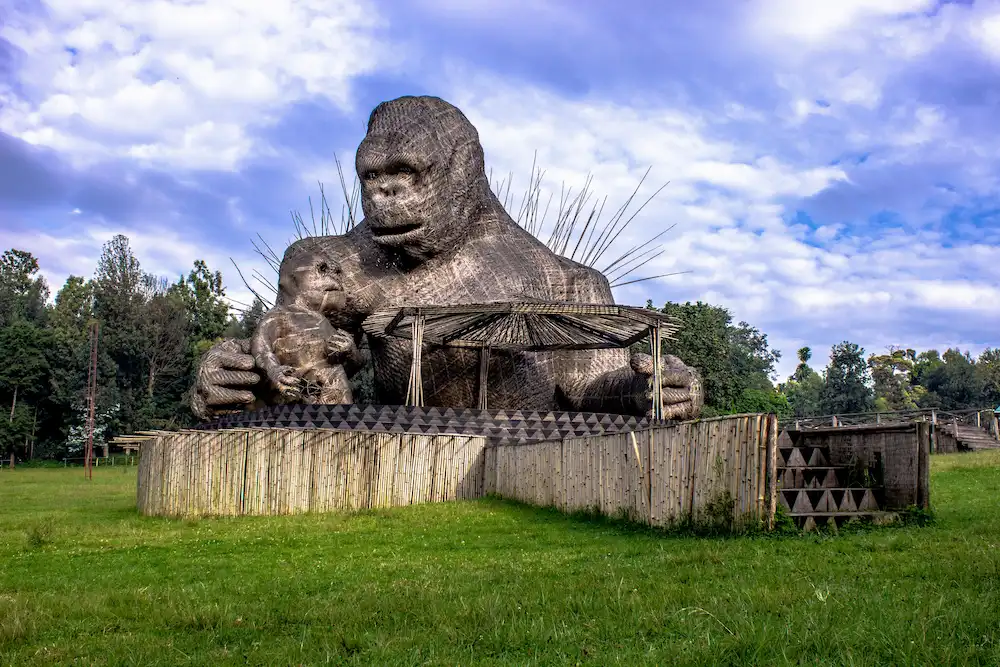
Rwanda, known as the Land of a Thousand Hills, is an immensely green and mountainous destination, where national parks and volcanoes are the main tourist draw. Its wildlife is just as famous as that of neighboring Uganda, especially for its mountain gorillas.
It's also a country where the memory still lingers of one of the most severe genocides in recent history, the 1994 Rwandan genocide, in which around 70% of the Tutsi population was killed, with an estimated death toll of between five hundred thousand and one million people. A painful history in a country that today surprises visitors with its recovery and natural beauty.
Do You Need a Visa to Travel to Rwanda?
Yes, as in most African countries, you need to apply for a Rwanda visa to enter the country. In addition to the visa, there are other documents you need to have in order; you can check them in detail in our guide to documents and requirements for traveling to Rwanda.
The most common visas are tourist visas, whether you're traveling on vacation or visiting friends or family. They allow stays of between 30 and 90 days, depending on your needs. If you plan to visit more than one country in the region, you can also apply for the visa that covers the East Africa route.
Some nationalities are exempt from applying for a visa, while others face restrictions when processing one. European citizens can apply online without any issues. Check your nationality's status in our eligibility checker, since exemptions vary according to international agreements and may be updated.

Types of Visas for Rwanda
Visas
There are different types of visas and permits for entering Rwanda. You'll need to choose the one that best suits your needs and the purpose of your trip.
Here are the main types of visa:
Transit Visa (VT)
Apply for this visa if you're making a stopover or connection in Rwanda, but the country isn't your final destination. It's processed online and has a maximum duration of 72 hours.
Tourist Visa (V1) and Family Visit Visa (V2)
You can apply for these visas either for a vacation or a family visit, with stays of between 30 and 90 days. Most nationalities can apply online. If you legally reside in Rwanda, you'll only need your residence card to enter and leave the country.
Job-Seeking Visa (V4)
Valid for 90 days, during which you can look for work in the country before applying for a work permit.
Conference Visa (V5)
You must apply for this if you're traveling to the country to take part in a meeting or conference. It's not valid for permanent work.
Investor, Trader, or Businessperson Visa (V6)
Recommended if you're traveling for business purposes. It's valid for 90 days and doesn't allow permanent work in the country.
Medical Treatment Visa (V7)
If you're traveling to receive traditional or alternative medical treatment, this is your visa. It has a maximum validity of 90 days.
Mobile Business Visa (V9)
This allows you to enter the country with a mobile business. Its duration can range from 2 to 10 years, and you must apply for it at the embassy, providing all required documentation.
Construction Visa (V10)
Allows entry into the country to carry out occasional construction work. If the job runs longer than the 90 days allowed, you can extend it through the embassy.
East African Tourist Visa (V11)
With this visa, you can visit 3 countries with a single application: Kenya, Rwanda, and Uganda. It's exclusively for tourism, allows multiple entries within the three countries, and has a maximum validity of 90 days. You must apply for it from the first of the three countries you visit: if your flight arrives in Rwanda, apply here; if it arrives in Kenya or Uganda, apply in those countries.
If you reside as a foreigner in Kenya, Rwanda, or Uganda, this visa is free; you only need to request an inter-state pass at the immigration counters when leaving your country of residence for either of the other two.
Crew Visa (VC)
Issued to flight crew members making a stopover in Rwanda. It's valid for 72 hours, extendable if necessary.
These are the most common visa types and categories. For all of them, you can apply for an extension of days, and there's a 5-day grace period after the visa expires to leave the country. If that period passes without you leaving or renewing your visa, you'll face a penalty and be expelled from the country.
Residence Permits
Once inside the country, having entered legally with a visa, you can begin the process of applying for a temporary or permanent residence permit.
Temporary Residence
The most common temporary residence permits are:
- Prospecting and mining work (class A)
- Agricultural activities (class B)
- Trade (class G)
- Religious activities (class I)
- Foreign worker with refugee status (class J)
- Volunteer worker (class P)
- Students and trade apprentices (class U)
Permanent Residence
The most common permanent residence permits are:
- Temporary residents of more than 10 years (class L1)
- Key personnel within multinational companies (class L3)
- Marriage (class L5)
- Children (class L6)
- Humanitarian work (class L7)

How to Apply for a Rwanda Visa?
You can apply for the tourist visa upon arrival at the airport or online, filling out a form with your details to get approval before you travel. We recommend traveling with your visa already approved: you'll avoid lines at the airport and, more importantly, you won't have room to fix any documentation issues if something goes wrong. The same applies to the transit visa, which you can process online or upon arrival.
For all other visas, you'll need to apply in advance at a consulate or through the official government website. You can also leave it in the hands of a third party like Visagov, which handles the process for you and answers any questions you may have.
Who Needs a Visa for Rwanda?
Practically all foreign nationalities need a visa to travel to Rwanda for tourism. There are exceptions based on international agreements and membership in certain organizations, so we recommend always checking your specific case in our eligibility checker before traveling.
Some nationalities can't apply for the visa online and must process it directly at the embassy. This isn't the case for Spanish nationals, who can complete the application online.
What Requirements Do You Need to Apply for a Rwanda Visa?
To apply for any visa, you need a passport valid for more than 6 months from the date of entry into the country. If you apply for the East African visa, in addition to your passport, you'll need to submit a recent color photo with a white background (the standard passport photo) and a document proving your accommodation (hotel, a friend's address, etc.). In both cases, the process is done online: you fill out a form, attach the documentation, and pay the corresponding fee. You can check the rest of the documentation needed to enter the country in our guide to documents and requirements for traveling to Rwanda.
Minors under 16 must always travel accompanied by at least one of their parents or legal guardians. If your reason for traveling isn't tourism, you'll need to go to a consulate or embassy to process the corresponding permit.
Can the Rwanda Visa Be Modified Once Processed?
No. Once processed and issued, the visa cannot be modified, so we recommend carefully reviewing your details and documentation before submitting them to the government.
Pay attention to the details: a small mistake can cause you a serious problem. Write your name exactly as it appears on your passport; if it doesn't match, your visa may be denied. Always double-check the form before submitting it.
How Much Does a Rwanda Visa Cost?
The cost of the visa varies depending on the type you select:
- Transit visa: $30 USD
- Tourist or family visit visa (30 days): $50 USD
- Tourist or family visit visa (90 days, multiple entries): $70 USD
- Conference visa: $50 USD
- East African tourist visa: $100 USD

How Far in Advance Should You Apply for a Rwanda Visa?
Although processing times are usually quick, between 3 and 5 business days, we recommend applying for the visa at least 15 days before entering the country to avoid any last-minute surprises.
What Are Rwanda's Entry Borders?
The main point of entry into the country is Kigali International Airport, located on the outskirts of Kanombe, about 12 kilometers east of the capital.
You can also enter by land through the Katuna border crossing, between Uganda and Rwanda, located in the Gicumbi district, about 80 kilometers north of Kigali. This crossing remains open 24 hours a day, as does Kagitumba, located at the country's northeastern tip, about 170 kilometers from the capital, which is the most common crossing between Rwanda, Uganda, and Tanzania.
These are the busiest border crossings, although other land crossings exist: Akanyaru Bas, Akanyaru Haut, Bugarama, Buziba, Cyanika, Kabuhanga, Nemba, Nshili, Poids Lourds, Rusizi I, Rusizi II, Rusumo, and Rutwa. Not all of them remain open at all times or have the same hours, so check ahead before deciding on your route.
Do You Need Vaccinations to Travel to Rwanda?
To travel to Rwanda, yellow fever vaccination is mandatory. Tetanus, MMR (measles, mumps, and rubella), and hepatitis A vaccines are also recommended. You'll find all the detailed health information in our guide to documents and requirements for traveling to Rwanda.
What Is Rwanda's Currency?
Rwanda's official currency is the Rwandan franc. You can exchange euros or dollars at major banks and many hotels throughout the country. It's a good idea to carry some cash for small expenses like transportation. Kigali has ATMs, although not all of them accept foreign cards; Visa, Eurocard, and Mastercard are accepted at establishments in the most touristy areas.
What Is the Best Time to Travel to Rwanda?
Rwanda's climate is very stable, with an average temperature of 22-23 degrees Celsius (72-73°F) year-round. October and November are the rainiest months, although rainfall isn't especially heavy.
There's no single best time to travel: you can enjoy the country and its wildlife in any season. If your goal is to see gorillas, the best option is the dry season, between December and February or between June and September, when they're easier to spot.

Is It Safe to Travel to Rwanda?
Today, Rwanda is one of the safest countries in Africa. The crime rate is very low, beyond the occasional pickpocketing incident. Isolated cases of violence rarely affect tourists and tend to involve disputes between residents.
Even so, there are border areas that are best avoided, such as the Democratic Republic of Congo and the Gisenyi/Goma and Cyangugu/Bukavu crossings. Rwanda advises its citizens against traveling to Uganda, which doesn't affect foreign tourists, although additional checks are possible. The border area with Burundi is another area to avoid due to existing tensions between the two countries.
Important Tips for Traveling to Rwanda
- Always carry a copy of your passport and visa during your stay in Rwanda.
- If you rent a car, be careful: Rwandan roads aren't very reliable and accidents are fairly common, and you'll also encounter children playing and people walking alongside the road.
- On the first and third Sunday of each month, Kigali bans motor vehicle traffic from 7 a.m. to 12 p.m. to promote environmental conservation.
- As in most countries, drug use is severely punished by law, with prison sentences.
- Although homosexuality and public displays of affection aren't prohibited by law, they aren't socially accepted. We recommend avoiding public displays of affection and respecting local customs, as there are prison sentences for offenses against public decency.
- It's strictly forbidden to photograph Kigali airport, government facilities, and military camps. Security forces maintain a very visible presence; avoid any altercation or argument with them.
